Clean Beauty, INCI Labeling, and Enzyme-Based Exfoliant Claims
For cosmetic manufacturers, enzyme exfoliation sits at a useful intersection: consumer-friendly language, controlled skin-feel, and formulation science that can be documented. The challenge is not simply choosing papain, bromelain, protease, or another enzymatic material. The challenge is building a product story that survives scale-up, ingredient review, regulatory scrutiny, stability testing, and consumer expectation.
Corneora supports factories looking for an enzyme supplier for cosmetic exfoliant manufacturing with materials selected for formulation behavior, documentation readiness, and repeatable exfoliation performance.
Clean beauty may shape the brief. INCI still shapes the label.
Clean beauty is a positioning system, not a replacement for INCI
“Clean beauty” is not a single global regulatory category. In practice, it is a brand-defined framework that may include preferences around ingredient origin, avoidance lists, biodegradability, vegan positioning, preservative choices, fragrance strategy, and perceived skin mildness.
INCI labeling is different. It is the standardized ingredient naming system used to identify what is actually present in the cosmetic formula.
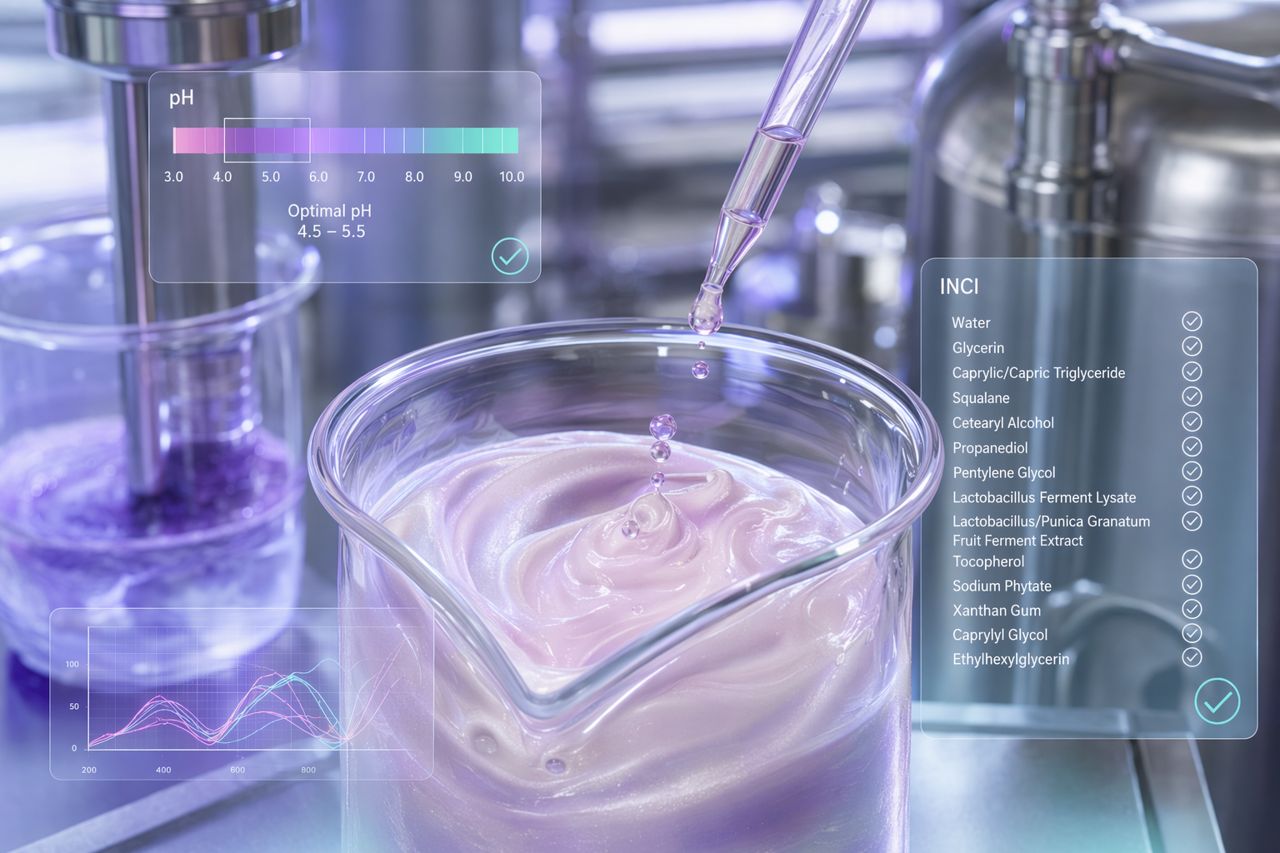
For enzyme exfoliants, this distinction matters because a marketing phrase such as “pineapple enzyme polish” or “fermented exfoliating complex” may not be the same as the ingredient names that appear on pack. The formula may require declaration of the enzyme, carrier system, stabilizers, preservatives, solvents, or processing aids depending on composition and regional requirements.
A refined claim story begins by separating:
- Consumer-facing concept: brightening polish, enzyme mask, resurfacing cleanser, radiance cream
- INCI declaration: the standardized names for the enzyme preparation and supporting ingredients
- Technical rationale: enzyme selection, pH window, compatibility, stability, and intended use level
- Documentation set: specifications, safety data, allergen statements, origin details, and lot traceability
That separation protects the brand promise and helps the factory avoid late-stage relabeling.
Common INCI considerations for enzyme exfoliant manufacturing
Enzymes used in cosmetic exfoliation are usually positioned by their biological function and source story, but the label must reflect the specific ingredient identity.
Common cosmetic enzyme names may include:
- Papain for papaya-derived proteolytic exfoliation concepts
- Bromelain for pineapple-derived proteolytic exfoliation concepts
- Protease for broader protein-targeting enzyme systems
- Subtilisin where appropriate to the selected enzyme technology
- Lipase or other enzyme types when used for specific cosmetic formulation objectives
The enzyme itself is rarely the only item to review. Many commercial enzyme preparations include supporting components designed to improve handling, stability, dispersion, or microbial control. For factories, those components can affect:
- Final INCI list order
- Clean beauty restriction screening
- Preservative system compatibility
- Vegan or animal-origin statements
- Natural-origin index calculations
- Regional documentation requirements
- Customer approval timelines
A supplier should be able to clarify the composition profile early, so your chemists are not forced to redesign the label after pilot stability.
Claims: what enzyme exfoliation can credibly support
Enzyme-based exfoliants are often chosen because they allow a softer sensorial route than abrasive scrubs or high-acid systems. The best claims connect the enzyme’s cosmetic function to visible and tactile outcomes without drifting into therapeutic language.
Practical cosmetic claim territories include:
- Helps remove dull surface buildup
- Supports a smoother skin feel
- Helps improve the appearance of skin radiance
- Provides gentle enzymatic exfoliation
- Refines surface texture
- Supports a polished, fresh-looking complexion
- Designed for controlled exfoliation in rinse-off or short-contact formats
Claims should be supported by the formula format, use instructions, skin compatibility work, and stability data. A powder mask, cream polish, rinse-off cleanser, and overnight product do not create the same exposure profile. The same enzyme may require different claim language depending on contact time, pH, preservation, and consumer usage pattern.
Avoid letting the story overtake the chemistry. “Enzyme-powered radiance” is elegant. “Removes living skin cells” is not a cosmetic-friendly direction. “Brightens skin tone” may require careful substantiation and regional review. “Anti-acne,” “treats keratosis,” or “repairs skin disorders” can move toward drug or therapeutic territory.
Formulation factors behind a clean enzyme label
A beautiful INCI list does not guarantee a successful enzyme exfoliant. The enzyme must remain functional through processing, filling, storage, and consumer use. For factory chemists, the following variables usually determine whether the launch scales cleanly.
pH window
Proteolytic exfoliation enzymes work within defined pH ranges. A formula positioned as gentle or skin-forward often targets a mildly acidic to near-neutral environment, but the exact window must match the selected enzyme. If the final pH drifts too far, exfoliation consistency can fade even when the label remains attractive.
Water and phase behavior
Enzymes may behave differently in anhydrous powders, aqueous gels, emulsions, cream masks, or surfactant systems. Water can activate, destabilize, or shift the preservation burden depending on the design. The right format should protect the enzyme until use while delivering a smooth sensory experience.
Heat exposure
Many enzymes are sensitive to high-temperature processing. Late-stage addition during cool-down, pre-dispersion strategy, and shear control can be decisive. A supplier should help define a practical manufacturing addition point rather than simply recommending a material.
Preservatives and surfactants
Some preservative systems, chelators, solvents, botanical extracts, or surfactants can reduce enzyme performance or alter skin feel. Compatibility checks are especially important in cleansers, exfoliating creams, and hybrid acid-enzyme systems.
Texture and sensory finish
Consumers judge enzyme exfoliants by feel before they understand the ingredient list. A successful formula should rinse cleanly, spread evenly, avoid gritty drag unless intentionally designed, and deliver a refined post-use skin feel. Enzyme selection affects the claim; the base formula determines whether the experience feels premium.
Documentation that helps B2B teams move faster
Clean beauty programs often fail not because the ingredient is wrong, but because the supporting file is incomplete. Before committing to a formula pathway, ask whether the enzyme material can be supported with the documents your customer and region require.
Useful supplier documentation may include:
- Technical data sheet with recommended formulation handling
- Safety data sheet
- INCI information and composition guidance
- Certificate of analysis by lot
- Origin and manufacturing statements where available
- Allergen, GMO, animal-origin, and residual solvent statements where relevant
- Preservative or carrier disclosure suitable for customer review
- Stability and storage guidance
- Regulatory support for target markets
For contract manufacturers and private-label teams, documentation speed is commercial speed. Every unanswered INCI, origin, or compatibility question can delay artwork, customer approval, and first production.
Clean beauty positioning without vague language
Strong clean beauty claims are specific, supportable, and formulation-aware. Instead of relying on generic phrases, build a claim matrix that connects the enzyme to the format.
Stronger claim construction
- “Enzyme exfoliating mask formulated to help polish dull surface buildup.”
- “Rinse-off cream exfoliant with a controlled pH window for a smooth, refined skin feel.”
- “Papain-based exfoliating complex designed for gentle surface renewal in a creamy base.”
- “Enzymatic polish for luminous skin appearance, supported by formula stability testing.”
Weaker claim construction
- “Chemical-free exfoliation”
- “Removes dead skin instantly”
- “Medical-grade resurfacing”
- “Non-irritating for all skin types”
- “Preservative-free” when the full system does not support that claim
The strongest language gives marketing a luminous story while giving regulatory and technical teams a defensible file.
What to ask an enzyme supplier before formulation lock
Before selecting an enzyme for a cosmetic exfoliant, ask practical manufacturing questions:
- What INCI name and supporting ingredients should be expected on the ingredient list?
- What pH window is recommended for the intended cosmetic format?
- Is the enzyme better suited for powder, gel, emulsion, cleanser, or short-contact mask formats?
- How should it be added during manufacturing to protect performance?
- What common preservatives, surfactants, acids, or botanical extracts require compatibility review?
- What storage and packaging conditions are recommended?
- What documentation is available before customer submission?
- How is lot-to-lot consistency controlled?
- Can the supplier support pilot, scale-up, and repeat production with the same specification logic?
The right answer is rarely just “yes, it works.” The right answer explains how it behaves in your formula.
Where Corneora fits
Corneora supplies enzyme solutions for cosmetic manufacturers developing exfoliating masks, cream polishes, cleansers, hybrid resurfacing products, and sensorial skin-renewal formats. We focus on the manufacturing details that determine commercial success: pH fit, stability behavior, dispersion, documentation, and consistent supply.
If your team is building a clean beauty exfoliant, we can help evaluate enzyme type, format suitability, INCI implications, and scale-up handling before the formula becomes expensive to change.
Request a quote through the on-site form and tell us your product format, target pH, processing conditions, preferred positioning, and documentation needs. Corneora will respond with practical options for your development path.
FAQ
Can enzyme exfoliants be positioned as clean beauty?
Yes, if the full formula, supplier documentation, and brand standard support the claim. The enzyme source story is only one part of the clean beauty review. Carriers, preservatives, solvents, fragrance, colorants, and packaging claims should also be checked.
Does a fruit enzyme always appear on the label as the fruit name?
Not always. Consumer language may reference papaya or pineapple, but the INCI list must use the correct standardized ingredient names for the enzyme preparation and associated components.
Are enzyme exfoliants gentler than acids or scrubs?
They can support a gentler sensorial profile, but mildness depends on the complete formula, use level, pH, contact time, skin compatibility testing, and consumer instructions. The claim should be substantiated by the finished product.
What matters most for scale-up?
Addition point, pH control, mixing conditions, water exposure, preservative compatibility, packaging, and lot documentation. These factors determine whether the pilot batch and production batch deliver the same exfoliation experience.
When should a factory contact Corneora?
Early in formulation. The best time is before artwork, claim language, and customer submission are locked. Early review helps align enzyme performance, INCI planning, and manufacturing behavior.